


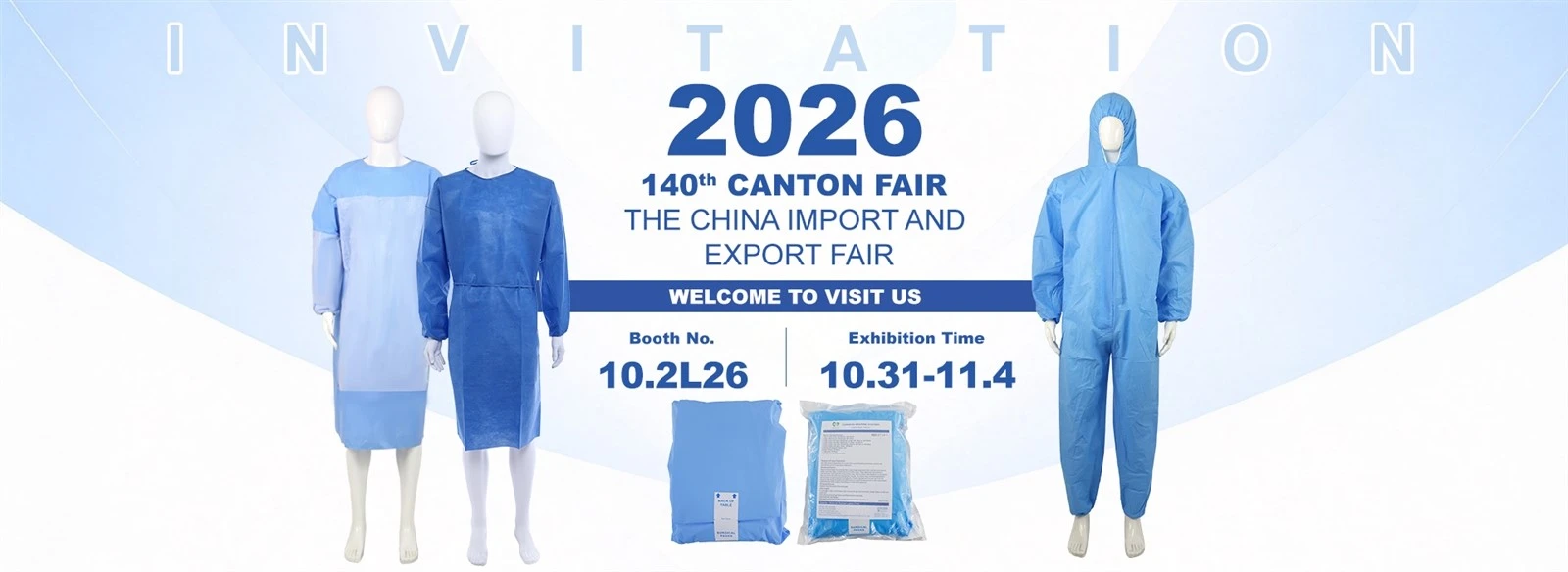
The 140th Canton Fair has just drawn to a close. Official figures show that 352,000 overseas buyers attended this session, a new record high. Strong foot traffic, however, does not necessarily translate into easy business. For us at Xiantao Zhongtai Protective Products Co., Ltd., the real takeaway from this fair was this: plenty of visitors, plenty of price inquiries, but very few buyers willing to commit to large orders on the spot.
The reason is not complicated. In 2026, the export business for non-woven disposable products is caught in an awkward squeeze.
Raw Material Costs Up Nearly 50%, While Buyer Budgets Remain Stuck at Last Year's Levels
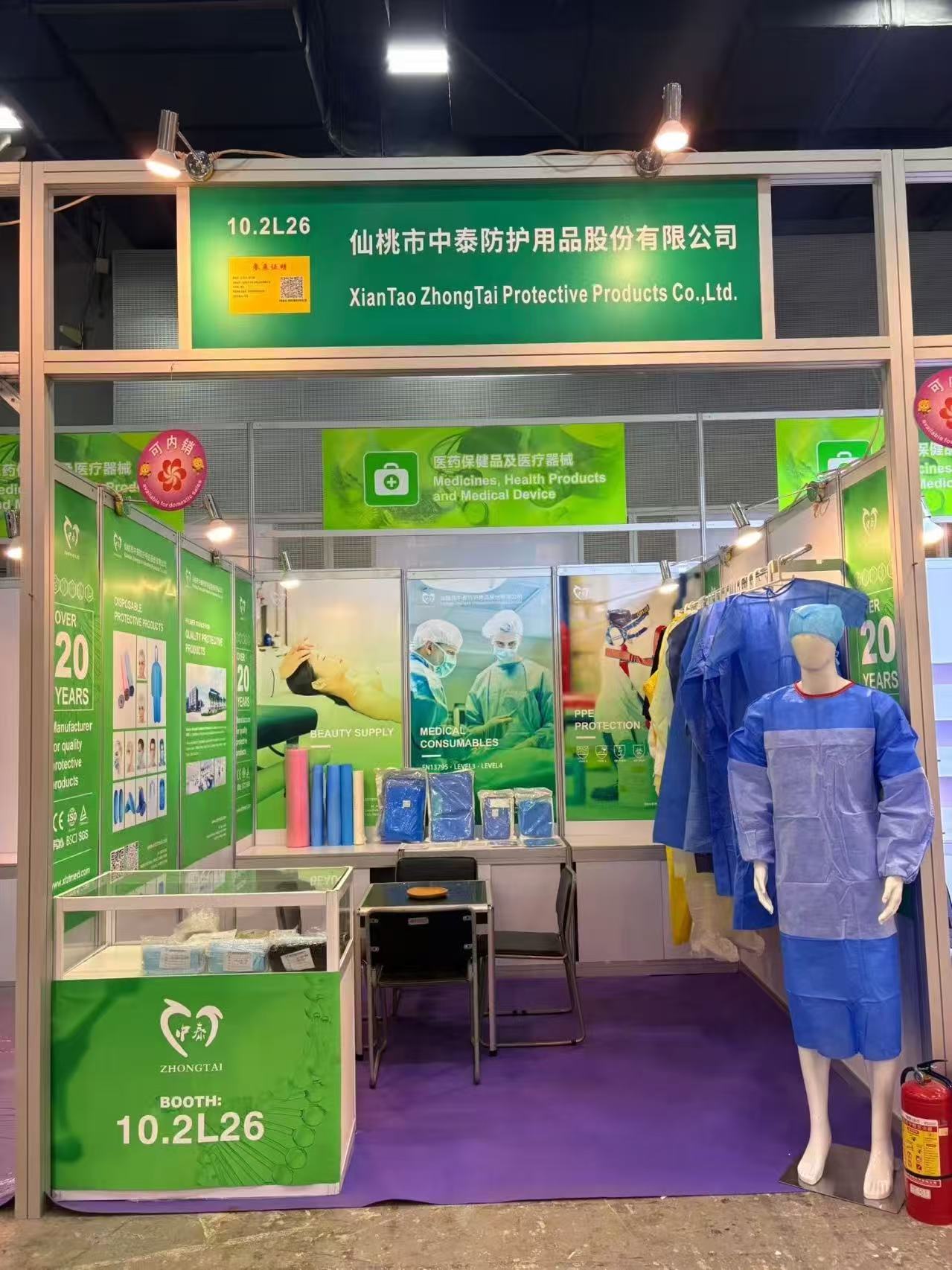
"How much is your isolation gown now? What was your price last year?" This was the question we heard most often at our booth. It was almost always followed by the buyer pulling out a phone calculator and punching in a number below our current cost line.
You cannot really blame them. In 2026, geopolitical conflicts have driven up crude oil prices, supply of polypropylene fiber-grade resin has tightened, and the PP non-woven industry as a whole is caught between "strong costs and weak demand." Our factory's raw material procurement costs have risen by nearly 50% since the beginning of the year. On top of that, the RMB continued to strengthen in October - on October 30, CNY closed at 6.6557 against the USD, up 0.75% from the end of the previous month - leaving the manufacturing margin razor-thin.
Most overseas buyers' psychological budgets remain anchored to last year's low prices. One long-standing Middle Eastern client admitted frankly at the fair: "I know raw materials have gone up, but my hospital clients haven't given me a bigger budget." Price negotiations this year have been far harder than in previous sessions.
Our Answer: No Loss-Making Orders, but Compliance-Ready Buyers Get Their Money's Worth
Faced with this situation, Zhongtai Protective's position is clear: quote reasonably, take orders prudently, and do not chase business through reckless price cuts. An order taken at a loss means either failed delivery or compromised quality - and in the end, that damages both the factory's reputation and the client's.
So what justifies a price that is "not the cheapest"? The second most frequent question at our booth was: "What certifications do you have? Can your products enter hospitals in our country?"
This is exactly where we had the strongest hand at this Canton Fair. While competitors were still citing basic management-system certificates, we put our SFDA registration front and center. In the category of disposable surgical gowns, surgical packs, and protective clothing, few factories hold mandatory market-access qualifications such as SFDA registration, with certificates issued by authorities recognized by local health departments. For buyers in the Middle East, Southeast Asia, and other markets with strict compliance requirements, this certificate means products can legally enter public hospital procurement systems - not just low-end distribution channels.
At the fair, a Saudi buyer's attitude shifted visibly after seeing our SFDA certificate. He had only stopped by to ask about pricing, but after ten minutes of conversation he said: "With this, we can talk long-term."
That is the signal we want to send: in a year of high costs, nobody wins a price war. But compliance barriers keep the right customers at the table.
The Three Questions We Were Asked Most at the Fair - Answered Here
For clients who did not have time to visit our booth for an in-depth discussion, here are the issues we addressed repeatedly on site
Q1: Can you guarantee stable lead times? Many factories take orders but cannot schedule production
+
-
A: Zhongtai Protective's core production lines are concentrated in Xiantao, Hubei, with a relatively complete chain from non-woven raw materials to finished-product sewing, sterilization, and packaging. Our order-taking rhythm is "take orders based on material availability, lock in volume and price" - we do not accept ultra-low-price rush orders beyond our capacity. The lead times we commit to are backed by raw material inventory and production scheduling. All five trial orders signed on site at the fair were confirmed by clients only after reviewing our production schedule.
Q2: Can surgical gowns and surgical packs be made to our country's standards?
+
-
A: Yes. We hold a full set of export certifications, and our key qualifications come from authoritative bodies. Whether it is AAMI Level 2/3 requirements or a specific market's sterilization validation format, technical documentation can be confirmed during the order review stage. Product lines covered by our SFDA qualification can directly support hospital procurement access in the Middle East and countries that recognize this system.
Q3: Prices are much higher than last year. What assurance can you give me?
+
-
A: Two things. First, quotations are calculated transparently based on the day's raw material costs - no inflated figures. Second, for clients signing quarterly or semi-annual framework agreements, we can include a price adjustment mechanism triggered when raw material prices fluctuate beyond a certain range, so both sides share the risk instead of one party absorbing all the cost pressure.
Industry Trends from the Canton Fair: Compliance Costs Are Replacing Price as the First Screening Threshold
After this Canton Fair, one impression stands out strongly: export competition in disposable protective products is shifting from "who is cheaper" to "who can give buyers peace of mind on customs clearance and hospital admission."
Buyer attendance from the EU and the US grew by 38.2% and 22.2% respectively. For these buyers, the first thing they do at a booth is often not ask about price but flip through the qualification binder. Rising raw material costs have eliminated a batch of workshop-style factories that relied on low-price volume, and the remaining purchasing demand is concentrating on factories with compliance capabilities and stable production capacity.

Zhongtai Protective's positioning is clear: we are not the cheapest; we are the one clients dare to entrust with long-term orders. Non-woven disposable surgical gowns, isolation gowns, protective clothing, scrub suits, surgical packs, surgical drapes - behind these products is infection control in hospitals, not fast-moving consumer goods on a street stall.
The Fair Is Over, but the Conversation Has Just Begun
Four days is too short. Many clients had only ten minutes at our booth before being pulled away by colleagues. If you did not have time for an in-depth conversation in Guangzhou - or did not make it to the show at all - here are two things you can do right now:
① Schedule a video factory tour or phone meeting. We can walk you through the production lines, sterilization equipment, and quality inspection processes at our Xiantao factory online, and send you scanned originals of our SFDA and other certifications for verification based on your target market. To schedule: call +86-15717220532 or email info@xtztmed.com, noting "Canton Fair follow-up."
② Request the Canton Fair exclusive quotation sheet and electronic product catalog. For clients who attended or followed us between October 31 and November 4, our export department has retained the quotation worksheets prepared during the fair. Email us info@xtztmed.com fill in your requirements, and we will respond within 24 hours. The quotation sheet is valid until December 31, 2026, with exchange rates and raw material cost benchmarks locked for the period.
Xiantao Zhongtai Protective Products Co., Ltd.
Every piece of protective equipment we make must be worthy of the hospital door it passes through.