


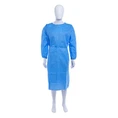


The overalls in the operating room are different from those of ordinary nurses. The official stage is a long-sleeved gown with a small turtleneck, the opening is at the back, and the nurse assists in wearing, this is called a surgical gown. The color is mostly light blue or light green. The inside of the surgical gown is considered a clean area if it comes into contact with the doctor's body, and if it comes into contact with blood, body fluids and patients from the outside, it is considered a contaminated area. The surgical gown must be completely isolated from the polluted environment and a clean environment, so it is tightly wrapped.
The V-neck short-sleeved style is officially called hand washing clothes. It is the work clothes used by the operating room staff in the clean environment of the operating room, whether it is a doctor, a nurse or an anesthesiologist. Once in the operating room, you must ask to change your gown. The short sleeves are designed to make it easier for the person involved in the surgery to clean the hands, forearms, and front third of the upper arms. After the surgeon completes the handwashing, the nurse assists in putting on the surgical gown.
Some hospitals like to use color to distinguish different staff, such as in Japan, where anesthesiologists usually wear dark red hand washing clothes. Domestic hospitals are basically dark green.
There is also a kind of clothing in the operating room, called a visitor's coat, which is used by outsiders to wear when they enter the operating room.
Except for the operating room and some specific departments, the rest of the nurses' work clothes are basically white dresses, and the colors of each hospital style will not be the same, but they are basically used all over the world, that is, you say "nurse's uniform" (nurse's uniform), and summer clothes will also be changed to short-sleeved style.